Filling a New Associate Dentist's Schedule With a Voice AI Receptionist
How to fill a new associate dentist schedule without overloading the front desk: Agent IA Vocal captures every call and turns new patients into booked visits.
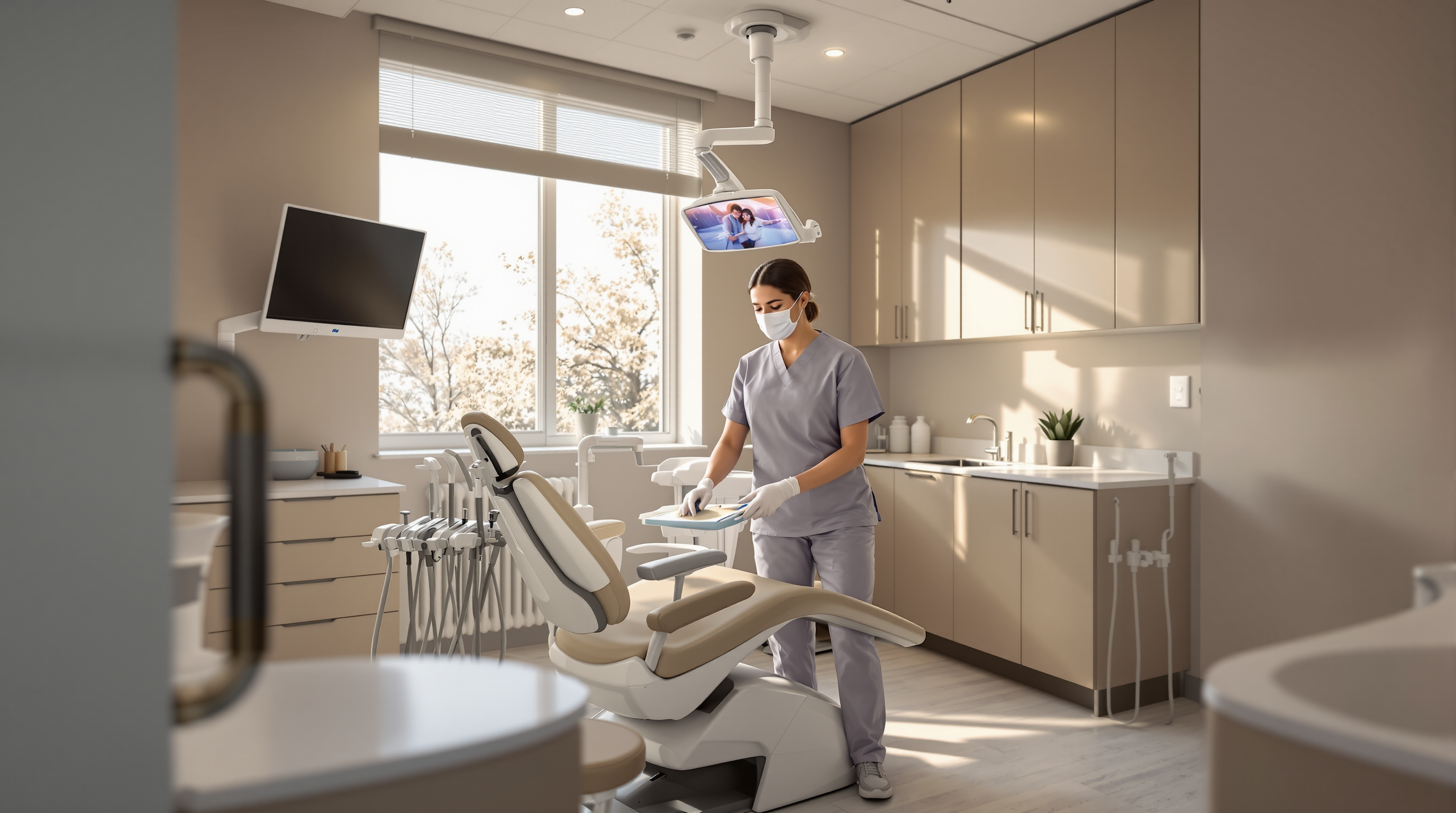
The new-chair paradox
Adding an operatory or bringing on a new associate dentist is one of the most profitable growth decisions a practice can make. Clinical capacity rises overnight: one more provider can mean dozens of additional production hours every week. Yet many practice owners in Hamilton ON, Mississauga ON, or Calgary AB reach the same conclusion a few months later. Capacity went up, but the new provider's schedule still starts half empty.
The problem is almost never the quality of the new dentist. It is mathematical. A fresh schedule fills with new patients and with existing patients redirected to the new provider. Both of those flows pass through the same bottleneck: the front desk phone. And that phone was already ringing more often than your team could answer, well before the extra chair arrived.
Why an associate's schedule fills slowly
When a practice adds clinical capacity, it does not automatically add front-desk capacity. The same person keeps answering calls, managing patients at the counter, handling insurance claims, and chasing confirmations. Every call missed during the lunch hour, every voicemail left unanswered in the evening, every caller who hangs up after four rings is an appointment that never got booked.
For an established practice, a missed call hurts but is absorbable: the existing patient base produces a steady flow. For a new associate dentist, it is different. Their schedule depends almost entirely on capturing fresh demand. A lost call is not a statistic; it is a 90-minute production block that will sit empty that Tuesday.
There is also a distribution effect. When a caller asks for "the first available appointment," a busy receptionist often offers the slot that is easiest to find, which is usually the slot of the best-known provider. The new associate, whose schedule is actually the most open, gets overlooked. Without a clear rule, the new chair stays last in line.
How Sophie fills a schedule from calls you already lose
Sophie is your virtual front-desk receptionist. She does not replace your team; she recovers the demand that slips past you today and routes it precisely to the provider who has room. Here is what that looks like in practice.
Capture every call, day and night, in both languages
Sophie answers 24/7 in both Canadian English and Canadian French, and switches language mid-call if the caller does. A new patient who finds your practice at 9 p.m. on a Sunday does not land in a voicemail box: they get an answer, their basic questions handled, and an appointment confirmed directly in your practice management system. In Edmonton AB and Burnaby BC alike, most new-patient calls arrive when the front desk is busy or closed. Those are precisely the calls that can fill a fresh schedule.
Sophie writes the appointment straight into your software: Open Dental, Dentitek, ClearDent, Dentrix Canada, Maxident, ABELDent, Curve, or tracker.tab32. No double entry, no manual callback the next morning.
Route new patients to the right provider
This is where Sophie genuinely changes the math for a new chair. You set one simple rule — for example, send new patients and routine cleanings to the new provider — and Sophie applies it to every call, without exception and without fatigue. The new associate's schedule stops being last in line. It becomes the one you fill first, because it is the one with availability.
A virtual receptionist is not distracted by a busy counter. She applies your distribution rule the same way on the 3rd call as on the 53rd.
Cut the no-shows that drag down a new schedule
A fresh schedule is fragile: a few absences are enough to make it look unproductive. Sophie sends structured reminders at day-7, day-2, day-1, and a final follow-up at 15 minutes past the scheduled time. In our deployments, this cadence moves the no-show rate from 14.2% to 8.8%, a 38% reduction. For a provider who is just starting, that difference decides whether the chair looks profitable by the end of the first quarter.
Sophie also performs three-level emergency triage — same day, within 48 hours, or this week — without ever offering a diagnosis. A genuine emergency is prioritized; a non-urgent request is scheduled intelligently, often into one of the new provider's open blocks. On any clinical question or sign of distress, the call is transferred to a member of your team.
A worked example
Consider a practice in the Halifax NS area that brings on a part-time associate for roughly 16 clinical hours a week. Assume a conservative hourly production figure and an improved capture rate on calls that are currently lost.
| Metric | Before Sophie | With Sophie |
|---|---|---|
| New-patient calls captured / week | 9 | 15 |
| No-show rate | 14.2% | 8.8% |
| Empty blocks in the associate's schedule | frequent | rare |
| First impression after hours | voicemail | answer + booking |
Six more new patients captured per week do not just fill boxes: they build the recurring patient base that will make the new chair profitable over time. You can model your own scenario with the ROI calculator: https://dentists.agentiavocal.ca/en/roi-calculator
Compliance and data in Canada
For a Canadian practice, the data question is not optional. All data Sophie processes is hosted in Canada, in AWS infrastructure in the ca-central-1 region in Montreal. The service is built for PIPEDA, and for Quebec Law 25 where applicable. Call recordings are kept for 90 days by default, this period is configurable, and they are then deleted automatically.
Professional oversight stays entirely in your hands. Sophie offers no diagnosis and transfers any clinical question to your team. The regulatory obligations toward bodies such as the RCDSO in Ontario, the CDSBC in British Columbia, or the ADA+C in Alberta remain those of your providers. You will find the technical measures detailed on the features page: https://dentists.agentiavocal.ca/en/features
One point that matters for a growing practice: all configuration and integration are handled by the TECHMA team. You set nothing up yourself. At the moment you are managing a new provider's arrival, adding Sophie does not add one more task to your list.
Simple pricing, aligned with your growth
Pricing follows the logic of a practice adding capacity. The Essentiel plan is 299 CAD per month for one practice with 200 minutes included. The Croissance plan, at 599 CAD per month, includes 600 minutes and suits most practices onboarding a new associate. The Multi-cabinets plan, at 899 CAD per month, covers up to three locations. Overage minutes are billed at 0.35 CAD per minute, and initial deployment is a one-time 999 CAD fee. The full breakdown is on the pricing page: https://dentists.agentiavocal.ca/en/pricing
If you are comparing the options on the market, our detailed comparison is here: https://dentists.agentiavocal.ca/vs-dentina
Put Sophie to work
A new chair only becomes profitable once it is full. The demand that will fill your new associate's schedule already exists: it is sitting in the calls your front desk cannot all handle today. Sophie captures that demand, routes it to the right provider, and protects the schedule against no-shows.
To see how Sophie would answer your calls and fill your new provider's schedule, book a live demo: https://dentists.agentiavocal.ca/en/live-demo