Oral Surgery Practices: Handling Referrals, Consults and Urgent Intake Without Missing a Call
How Canadian oral surgery practices handle referrals, consults and urgent intake with Agent IA Vocal: 24/7 answering, PIPEDA compliance, fewer no-shows.
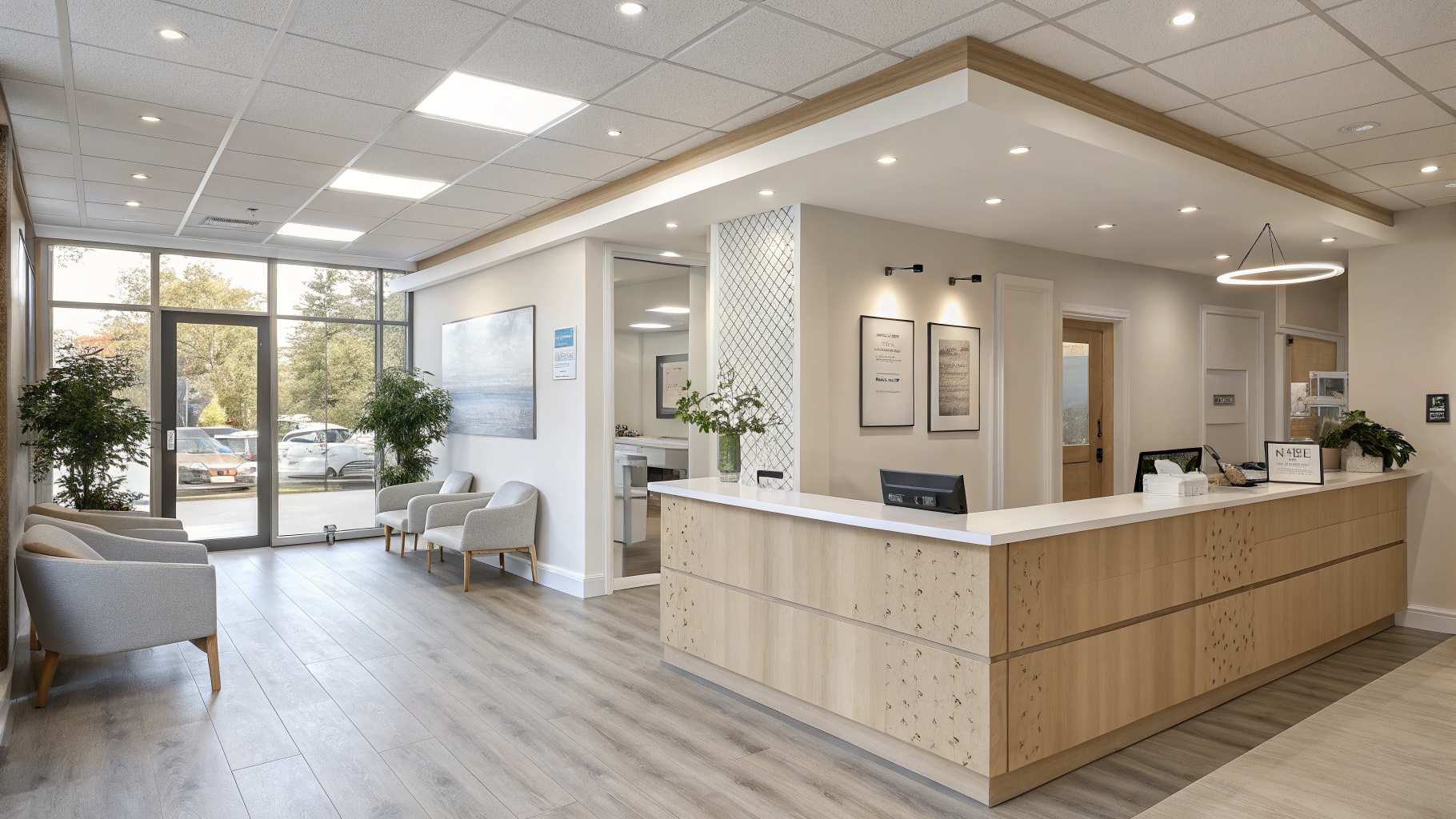
An oral surgery practice does not receive the same calls as a general dental office. Most patients arrive by referral from a treating dentist, often with a radiograph in hand and a very real worry: an impacted wisdom tooth, a complex extraction, a biopsy, an implant to plan. Every missed call is therefore not just a lost patient — it is also a disappointed referring dentist who may send the next patient somewhere else. In Hamilton ON, Mississauga ON or Calgary AB, where oral surgery practices serve wide catchment areas, the phone line is quite literally the primary business channel.
An oral surgery phone line is unlike any other
In a general practice, the front desk mostly handles hygiene appointments and routine exams. In an oral surgery centre, call volume is lower, but each call carries a much higher average value: a wisdom tooth consultation often leads to a procedure worth several hundred dollars, and an implant case to a treatment plan worth several thousand. Three types of calls dominate the day.
- Calls from referring offices: a treatment coordinator calls to place a patient, send over a radiograph or check availability.
- Referred patients calling on their own: they have the practice name on a slip of paper and want an appointment quickly.
- Urgent requests: post-operative pain, bleeding, swelling — situations that demand an immediate answer and disciplined routing.
When those three streams converge on a single receptionist — between patients to greet and charts to prepare — calls inevitably land in voicemail. And a referring office coordinator who hits an answering machine twice eventually dials another surgery centre's number.
Sophie, your virtual front-desk receptionist, answers every call
Agent IA Vocal places Sophie, your virtual front-desk receptionist, at the front of your phone system. Sophie answers 24/7, in English and in French, and can switch languages mid-call — a concrete advantage in Surrey BC or Winnipeg MB, where referred patients arrive from every community.
In practice, Sophie does three things for an oral surgery practice.
Take in referrals without friction
When a referring office calls, Sophie collects the essentials: patient name, referring dentist, reason for referral, stated urgency level and callback details. She books the consultation directly into your practice management system — Open Dental, Dentitek, ClearDent, Dentrix Canada, Maxident, ABELDent, Curve or tracker.tab32 — following the scheduling rules your team has defined: blocks reserved for consultations, protected surgical time, and different appointment lengths by procedure type.
Triage urgent calls rigorously, without ever diagnosing
Sophie applies a three-level triage — same day, 48 hours, this week — based on logistical criteria your team approves. She makes no diagnosis and gives no clinical advice: the moment a call touches a medical question, active bleeding or evident distress, Sophie transfers immediately to a member of your team or to the on-call protocol you have defined. The surgeon keeps full clinical control; Sophie handles only routing and scheduling.
Confirm, remind, reduce no-shows
An empty surgical block costs far more than a cancelled cleaning. Sophie sends reminders 7 days, 2 days and 1 day before the appointment, then follows up 15 minutes after a missed one. Across dental practices using this protocol, the no-show rate fell from 14.2% to 8.8% — a 38% reduction. For a surgery centre where each block is worth several hundred dollars, the revenue effect is immediate.
High-value consultations should never wait
A patient referred for wisdom teeth or an implant is a decided patient: their dentist told them to call. If they reach voicemail at 5:45 p.m., they may call back tomorrow — or ask their dentist whether there is another centre nearby. Sophie answers in the evening, on weekends and over the lunch hour, books the consultation on the spot, and records the referring dentist's name so your coordinator can request the radiograph first thing the next morning.
In a specialty practice, the first phone contact is the start of the surgical journey. A call answered in ten seconds is one more consultation on the calendar and one more reassured referrer.
Pre-operative logistics follow the same principle: Sophie relays only the standard instructions your team has approved — arranging an escort after sedation, arrival time, documents to bring. Any clinical question (medication, medical conditions, adjusted fasting) is transferred to your staff. That is a strict boundary, and it is precisely what makes the service safe.
A table to clarify the roles
| Call type | What Sophie does | What your team does |
|---|---|---|
| Referral from a dentist | Collects details, books the consult in the practice management system | Retrieves the radiograph, validates the plan |
| Referred patient | Books the appointment, records the referrer | Prepares the chart before the consult |
| Post-operative urgency | Three-level triage, immediate transfer on any clinical criterion | Clinical assessment and directions |
| Fee question | Shares approved general information | Presents the detailed treatment plan |
Compliance: PIPEDA first, without compromise
The data held by a surgical practice is among the most sensitive in dentistry: medical conditions, medication, surgical history. Agent IA Vocal hosts all data in Canada, in the AWS ca-central-1 region in Montreal. The service complies with PIPEDA, and with Quebec Law 25 where applicable; call recordings are kept for 90 days by default — a configurable period — then deleted automatically. For surgeons regulated by the RCDSO in Ontario, that documented traceability simplifies compliance conversations; practices under the CDSBC in British Columbia, the ADA+C in Alberta and provincial regulators in Halifax NS and across the Atlantic provinces benefit from the same framework.
Setup is done entirely by the TECHMA team
Your practice configures nothing. The TECHMA team performs the full integration: connecting the practice management system, setting surgical scheduling rules, defining triage criteria with your team, and recording the approved logistical instructions. The full capability list is at https://dentists.agentiavocal.ca/en/features .
What does it cost?
Pricing is simple and in Canadian dollars. The Essentiel plan at $299 CAD/month covers one practice and 200 minutes; the Croissance plan at $599 CAD/month includes 600 minutes, a volume suited to most specialty centres; the Multi-cabinets plan at $899 CAD/month covers up to 3 locations — relevant for surgeons operating in both Edmonton AB and a satellite clinic. Overage minutes are billed at $0.35 CAD/min, and deployment is a one-time $999 CAD fee. Full details are at https://dentists.agentiavocal.ca/en/pricing , and you can estimate the financial impact for your own centre with https://dentists.agentiavocal.ca/en/roi-calculator .
What this changes for a referrer
Put yourself in the chair of the general dentist in Burnaby BC who refers three patients a month for surgery. Once they learn their patients get a consultation on the very first call — even on a Thursday evening — your centre becomes their default first choice. The quality of your phone intake is a business-development argument as powerful as a study club presentation or a courtesy lunch, and it works for you every single day of the year.
See Sophie in action
The best way to evaluate a virtual front-desk receptionist is to hear her handle a real scenario: a coordinator placing a referral, an anxious patient after an extraction, a wisdom tooth consultation request. Book a 20-minute live demonstration and test those scenarios yourself: https://dentists.agentiavocal.ca/en/live-demo .